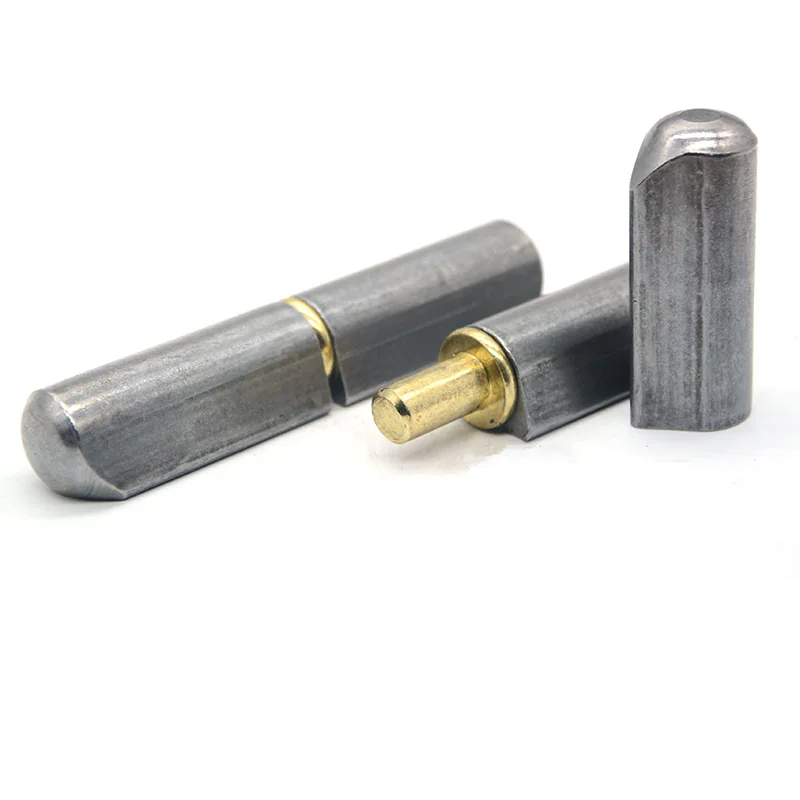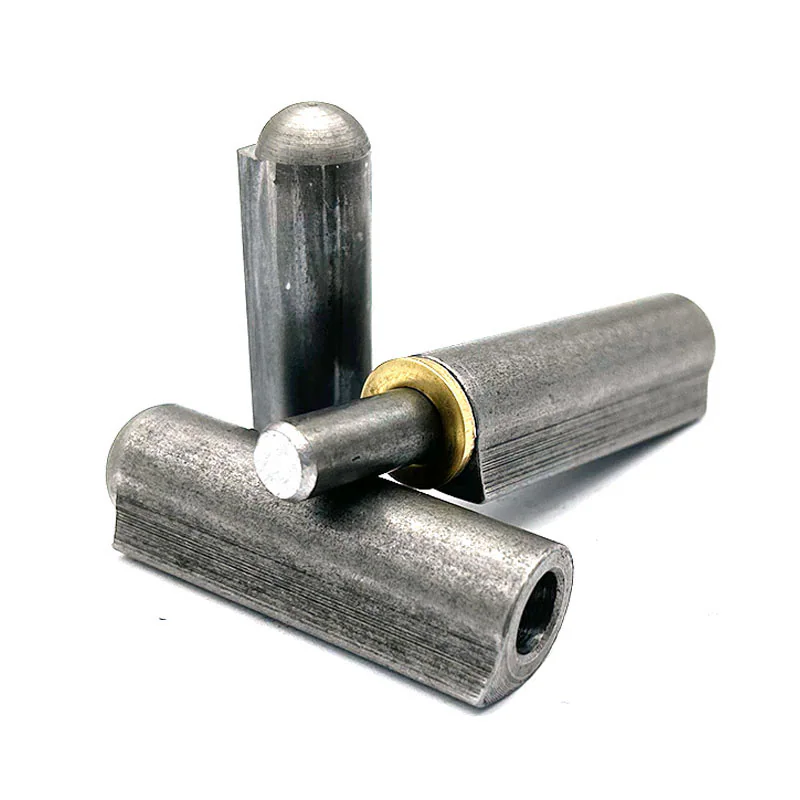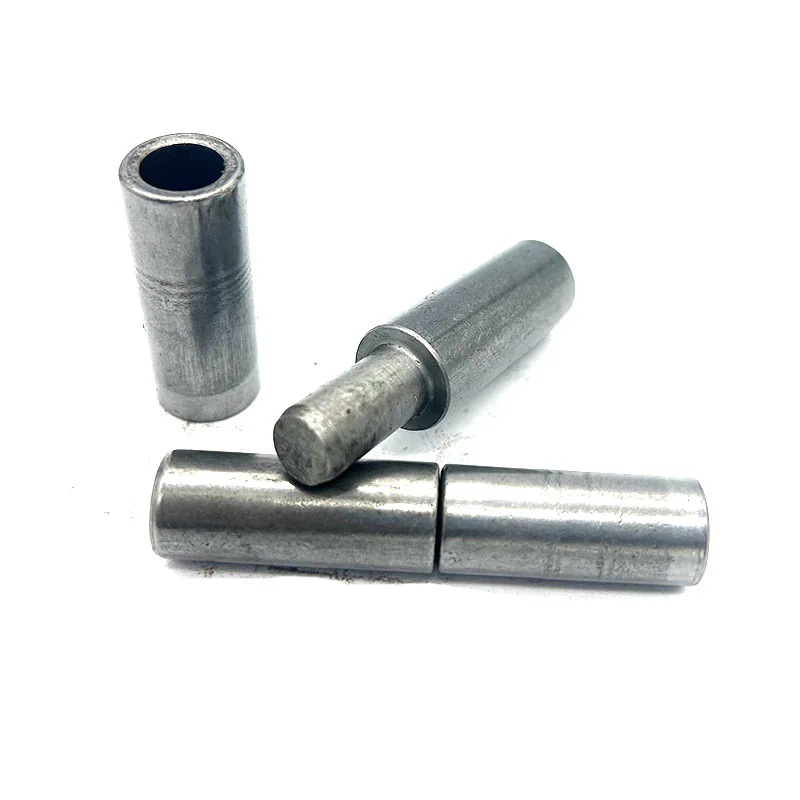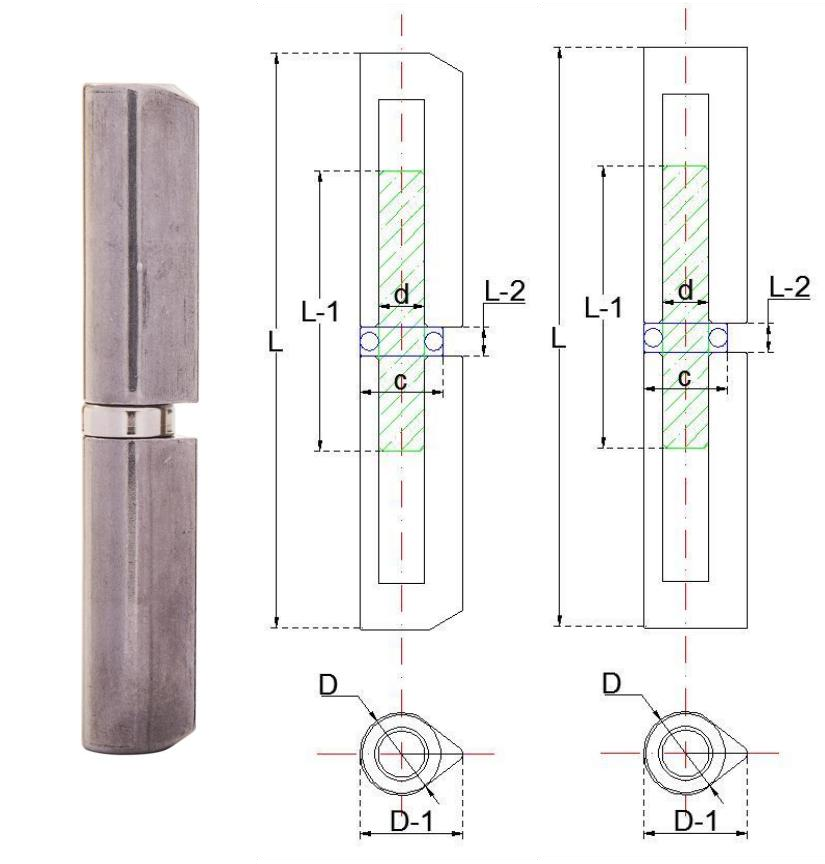
Identify the detail being described
What is the difference between bearing, pin and washer hinges?
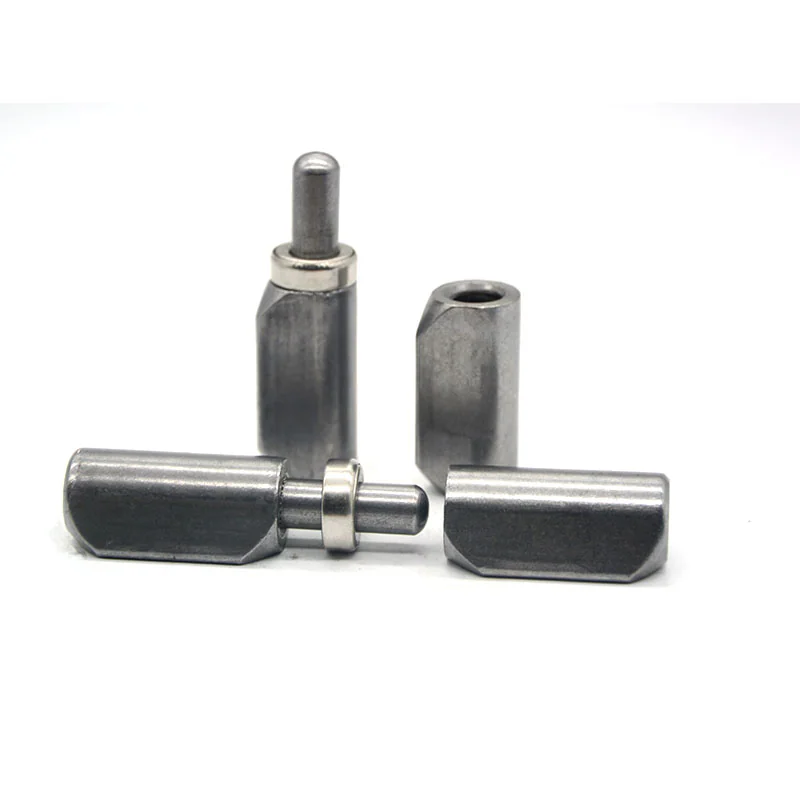
These names highlight different components. A pin forms the pivot; a washer sits between parts of the assembly; a bearing is part of the pivot arrangement. A bearing hinge can also contain a pin, so the names are not mutually exclusive descriptions of every component. Use the section view or assembly photograph to identify what is included.
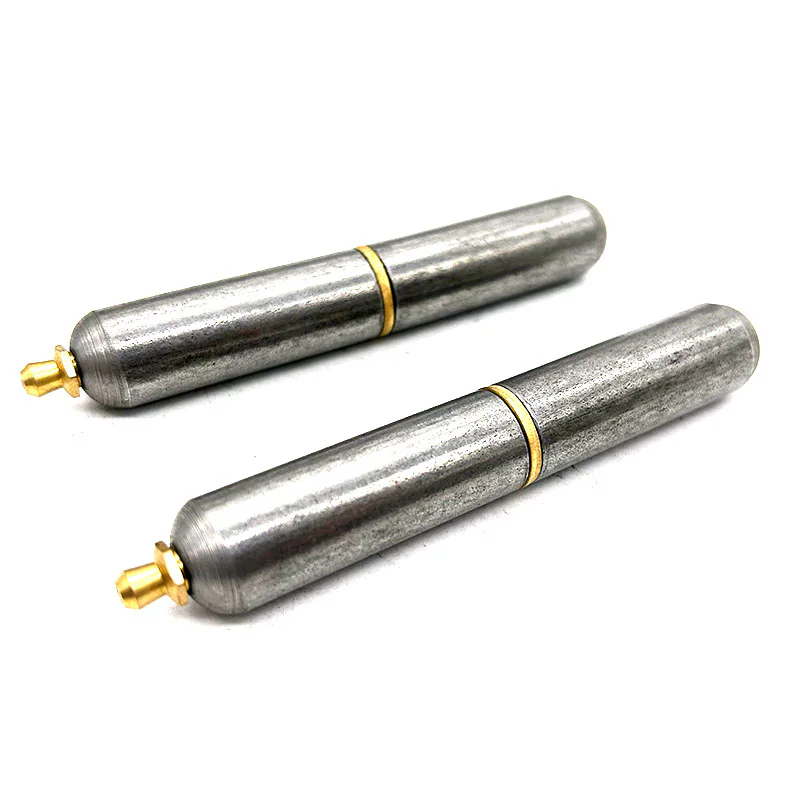
Hinge suppliers distinguish products using construction details as well as overall shape. PINET’s weld-on range includes products described by pin, washer, bearing and grease-nipple features. Those descriptions identify its products; they do not establish the components or performance of another manufacturer’s hinge.
For a HINGETRA inquiry, use the named bearing, pin or gasket family and its own size table. Compare the photographs on those product pages. The catalog does not specify the bearing design or washer material; identify any required construction on your drawing.
Ball bearing vs brass washer: what changes in the comparison?
A ball-bearing description identifies rolling elements, while a brass-washer description identifies a component and its material. Neither name defines the whole hinge. PINET, for example, lists separate ball-bearing and brass-washer weld-on products in the range linked above. For HINGETRA, the published names remain Bearing Type and Gasket Type; the catalog does not confirm a ball-bearing design or a brass washer.
Comparison table Scroll horizontally →
| Requirement | Ball-bearing proposal | Brass-washer proposal |
|---|---|---|
| Construction | Ask for the bearing arrangement, retention and component specification. | Ask for washer dimensions, material specification and the mating surfaces. |
| Frequent opening | Define the intended duty and ask for relevant operating or test information. | Use the same duty and acceptance criteria when comparing the proposed hinge. |
| Dust and moisture | Check protection of the bearing and the applicable lubrication instructions. | Check exposed contact surfaces, cleaning access and lubrication instructions. |
| Door movement or sag | Assess the complete hinge, mounting joint and frame under the specified conditions. | Use the same installation and measurement conditions; the washer name supplies no sag limit. |
| Maintenance | Confirm which components can be serviced or replaced and how they are reached. | Confirm washer retention, access and the agreed replacement arrangement. |
This is a specification checklist. No comparative torque, cycle-life or sag test has been published for these HINGETRA families.
Rolling elements can reduce friction, but their operating conditions still matter. SKF’s lubrication and contamination explanation describes why lubricant quality and contamination affect rolling-bearing life. That supports asking about protection and maintenance; it does not establish that an unspecified bearing hinge will outlast a washer hinge.
For a frequently opened access door, give the expected opening pattern and acceptable operating effort. For a dusty installation, describe the contamination and cleaning access. If door sag is the concern, define where it is measured and under what load. Ask for evidence against those requirements rather than treating the component name as the result.
Compare the three product records
Bearing, pin and gasket family references
Compare the exact size examples with each family’s own photograph. The bearing page also includes an original reference drawing.
Technical table Scroll horizontally →
| Product family | Structure | Published entry | Published weight | Source |
|---|---|---|---|---|
| Bearing Weld-On Hinges | Water-drop · bearing assembly | ф16*100mm mm | 142 g | Catalog p7 |
| Bearing Weld-On Hinges | Water-drop · bearing assembly | ф32*180mm mm | 1180 g | Catalog p7 |
| Pin Type Weld-On Hinges | Water-drop · pin construction | Φ16*75mm mm | 107 g | Catalog p9 |
| Pin Type Weld-On Hinges | Water-drop · pin construction | Φ20*140mm mm | 320 g | Catalog p9 |
| Gasket Type Weld-On Hinges | Water-drop · gasket | Φ12x14x100mm mm | 77 g | Catalog p10 |
| Gasket Type Weld-On Hinges | Water-drop · gasket | Φ25x30x250mm mm | 929 g | Catalog p10 |
Comparison table Scroll horizontally →
| Reference | Point to clarify |
|---|---|
| Bearing | Which internal arrangement is required? Identify it on the drawing. |
| Pin | What pin and body dimensions must match the installation? |
| Gasket / washer | Which component does the name refer to, and what dimensions are required? |
Does a gasket or washer hinge make the door waterproof?
No. The gasket family name refers to the component shown between the hinge bodies. It does not establish a weather seal or an enclosure IP rating. If sealing is required, identify it as a separate requirement for the complete door and frame assembly.
Check fit before comparing preferences
Keep the assembled length, body profile and drawing parameters together for each candidate. If one part matches the length but places the hinge axis differently, it may not fit the same door edge. A section through the frame and door makes that difference easier to review.
Published hinge weight is the mass of that entry. It is not a measure of how much door weight the assembly can carry. Explain the door dimensions, weight and hinge layout separately, and ask for review of the intended arrangement.
If a drawing uses a compound size string, retain the full notation and mark the corresponding features. The hinge size guide covers these checks.
Open the Bearing Type weld-on hinge drawing and the Gasket / Washer Type product record when identifying a candidate. If washer or pin material is part of your specification, include it separately using the material and finish checklist.
Send a comparison the supplier can answer
- List the exact candidate families and sizes.
- Attach one current installation drawing for all candidates.
- Mark fixed dimensions and any feature that may change.
- Ask separately about removal, lubrication access or another requirement.
- Keep unanswered construction details as open points in the quotation review.
If lubrication access is part of the decision, read the grease-fitting guide. A fitting on the hinge is useful only if the chosen installation allows the required access.