Anatomy and Operating Principles of Lift-Off Weld-On Hinges
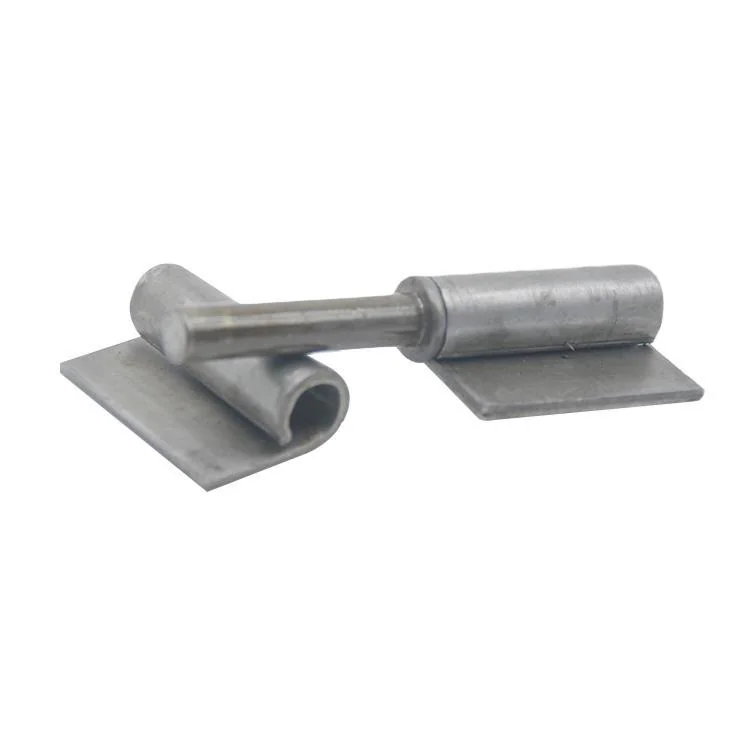
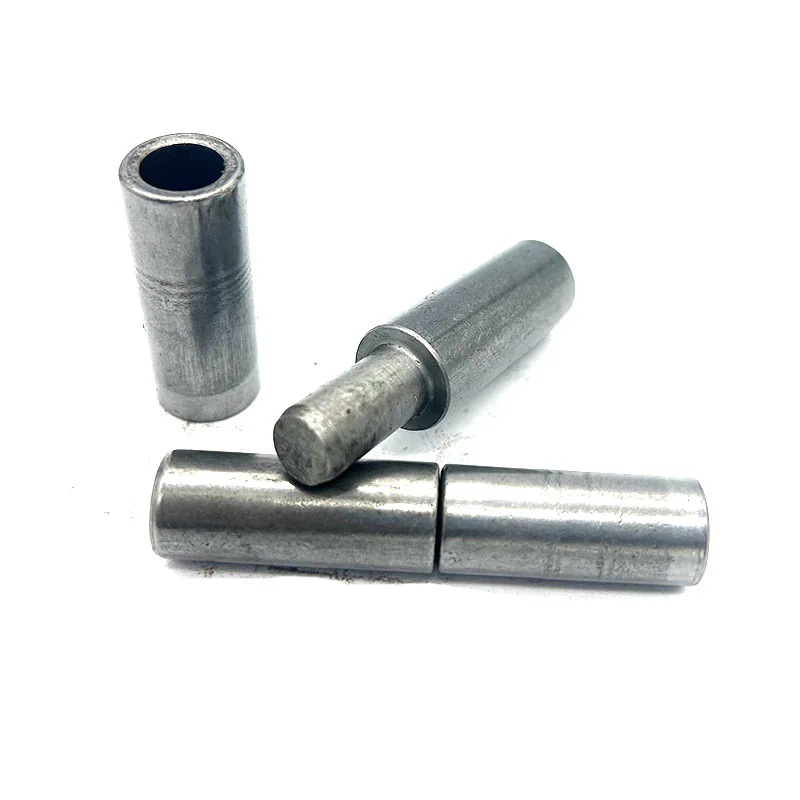
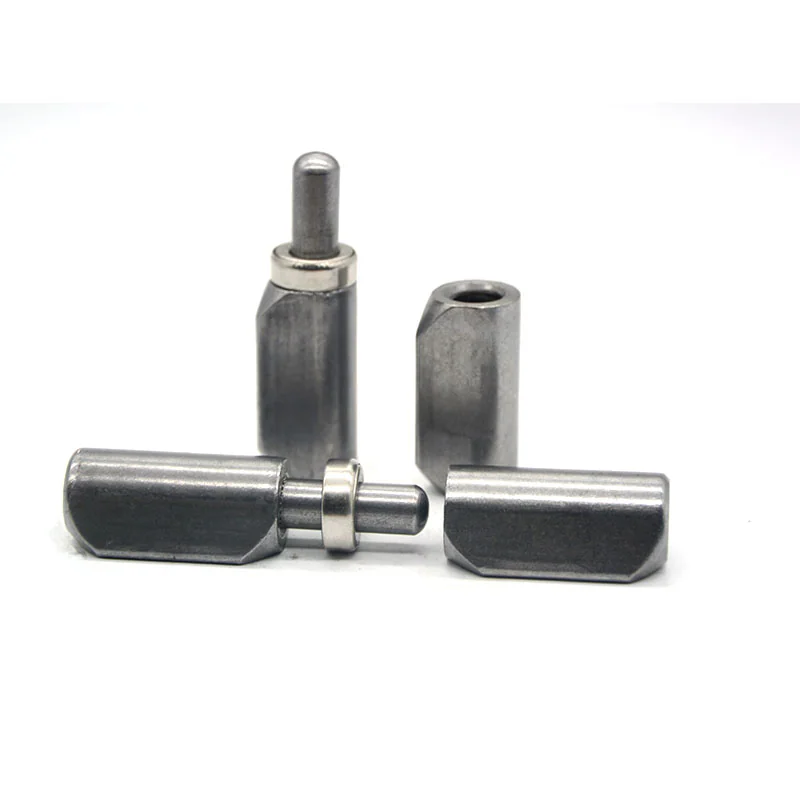
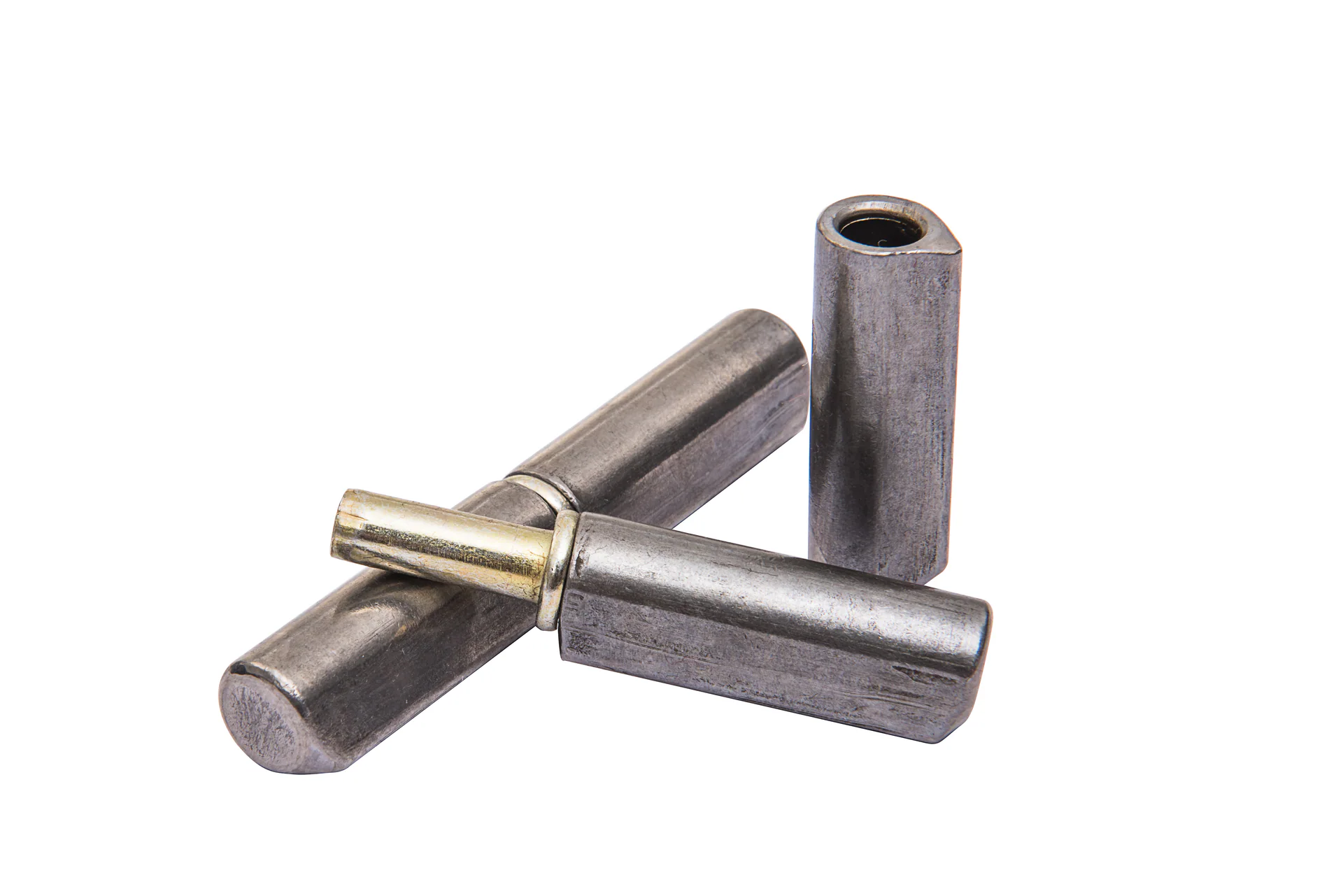
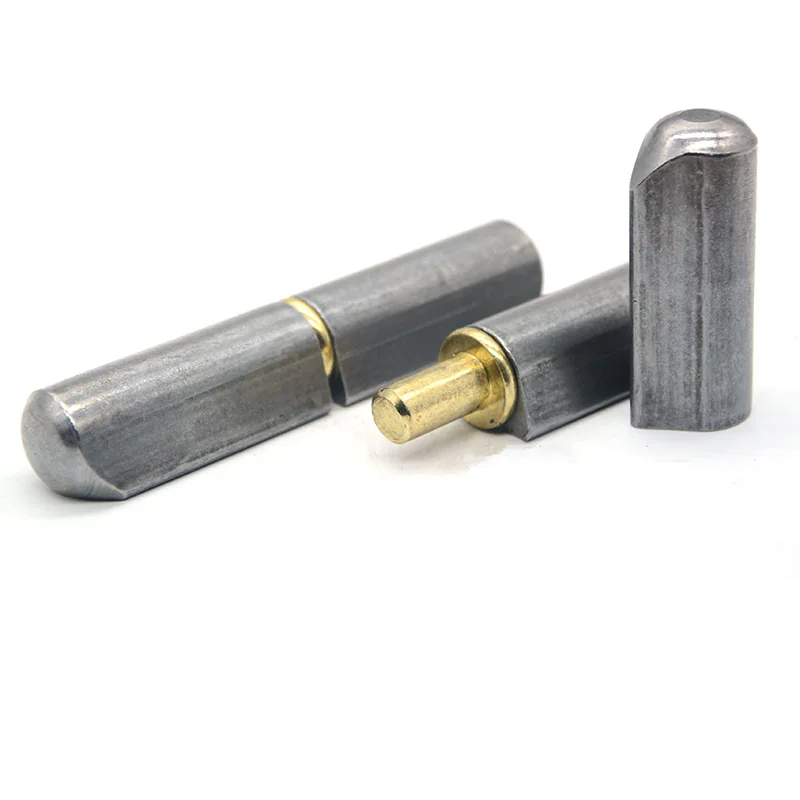
A lift-off weld-on hinge consists of two separable cylindrical or teardrop-profile barrels: a male lower barrel (pin barrel) and a female upper barrel (socket barrel), separated by a low-friction thrust washer or bearing assembly.
Key Structural Configurations
- Bullet/Barrel Lift-Off Hinges: Solid round or teardrop profiles precision-machined from cold-rolled steel, stainless steel, or aluminum. The teardrop profile includes a tapered weld-wing that maintains precise frame standoff distance.
- Flag / Slip-Joint Hinges: Fabricated leaves offset from the pivot axis, widely used on sheet metal enclosures and electrical panels where a flat mounting surface is preferred.
- Heavy-Duty Block Hinges: Rectangular profiles designed for extreme load transfers on vault doors, ballistic enclosures, and heavy machinery covers, frequently incorporating grease fittings and hardened alloy pins.
Determining Left-Hand vs. Right-Hand Orientation
Because lift-off hinges rely on an upward-pointing pin on the fixed frame, they are fundamentally handed (directional). Ordering the incorrect hand results in an inverted installation where gravity forces the door to drop off the pin rather than seat onto it.
Standard Industry Handing Protocol
- Position Yourself: Stand on the exterior side of the enclosure or gate where the hinges are visible and the door swings towards you.
- Identify the Pivot Edge: If the hinge is on the right side of the frame, you require a Right-Hand (RH) Lift-Off Hinge. If the hinge is on the left side of the frame, you require a Left-Hand (LH) Lift-Off Hinge.
- Verify Pin Orientation: On the stationary frame half, the solid pin must always point upwards. The door-mounted female barrel must have its open receiver socket facing downwards.
Comparison table Scroll horizontally →
| Hinge Handing | Door Swing Direction | Fixed Frame Barrel Position | Movable Door Barrel Position | Primary Sourcing Identifier |
|---|---|---|---|---|
| Right-Hand (RH) | Swings open to the right (Clockwise from top) | Right frame jamb, pin pointing UP | Right door edge, socket facing DOWN | RH / Clockwise lift-off |
| Left-Hand (LH) | Swings open to the left (Counter-clockwise from top) | Left frame jamb, pin pointing UP | Left door edge, socket facing DOWN | LH / Counter-clockwise lift-off |
| Universal / Reversible (2-Piece) | Symmetrical barrels with floating pins | Invertible barrel orientation | Invertible barrel orientation | Reversible (non-captive pin) |
Never install a lift-off hinge with opposed pins on the same door leaf unless intentionally creating a captive, non-detachable assembly.
Mechanical Load Dynamics: Axial vs. Radial Forces
Selecting the correct size of a weld-on lift-off hinge requires analyzing two distinct vectors of force: Axial Load (vertical door weight) and Radial Load (horizontal cantilever moment).
Axial load represents the total static weight of the door assembly, including any door-mounted hardware, window glass, or internal electronics. In a standard multi-hinge vertical configuration, the axial load is predominantly carried by the thrust washer interface.
Radial load is the horizontal shear force exerted on the hinge pin and barrel bushings due to the door width cantilever effect. As door width increases relative to vertical hinge spacing, radial load scales linearly, requiring larger pin diameters to prevent deflection and binding.
Comparison table Scroll horizontally →
| Duty Classification | Typical Hinge Profile & Construction | Primary Load Limiting Factor | Representative Applications | Critical Engineering Verification |
|---|---|---|---|---|
| Light Duty | Small-diameter round or teardrop bullet barrels with cold-rolled steel or stainless pins | Radial pin deflection on wide doors; weld bead size on thin sheet metal | Electrical junction boxes, toolboxes, instrument access panels | Ensure sheet metal gauge supports local weld zone without oil-canning |
| Medium Duty | Standard industrial bullet/barrel hinges with brass or sintered bronze thrust washers | Thrust washer surface wear rate and rotational friction under continuous cycling | Control cabinets, machine guards, generator enclosures, HVAC access doors | Verify vertical clearance for door removal and washer lubrication schedule |
| Heavy Duty | Thick-walled teardrop barrels or heavy block hinges with hardened alloy/stainless pins and grease fittings | Pin shear stress under dynamic impact; weld throat thickness on structural frame | Commercial utility trailers, security gates, armory doors, industrial blast covers | Calculate radial cantilever moment and verify dynamic safety factor |
Exact working load limits must be confirmed against engineering specifications for the selected alloy, pin diameter, and mounting geometry.
Vertical Removal Clearance and Coaxial Alignment Geometry
The fundamental tradeoff of a lift-off hinge is that vertical clearance must exist directly above the door for removal. If an overhead structure (such as an awning, rain gutter, or conduit) obstructs the lift-off path, the door cannot be detached.
The absolute minimum vertical clearance required above the top edge of the door must equal the pin insertion length plus an operating safety buffer to allow operator grip and prevent scuffing the top frame jamb during lifting.
For installations with three or more hinges, collinear alignment is critical. When rotational axes deviate from strict collinearity, the door may rotate under manual leverage but will mechanically bind when lifted vertically. Fabricators should always use a precision continuous alignment mandrel during tack welding.
Material Selection, Bearing Interfaces, and Surface Treatments
The interface between the pin and barrel dictates rotational friction, galvanic corrosion resistance, and operational lifespan across diverse operating environments.
Comparison table Scroll horizontally →
| Interface Type | Friction & Wear Characteristics | Corrosion & Material Profile | Maintenance Requirement | Optimal Application |
|---|---|---|---|---|
| Solid Brass Washer | Low sliding friction; acts as a standard sacrificial bearing surface | Excellent galvanic compatibility with carbon steel and stainless steel | Periodic oiling or grease application | General purpose industrial enclosures, standard steel gates |
| Sintered Bronze (Oil-Impregnated) | Self-lubricating dry boundary layer from oil-impregnated microporous matrix | Resistant to atmospheric oxidation; non-magnetic | Zero-maintenance for indoor sealed environments | Electrical switchgear, HVAC access panels, cleanrooms |
| 316 Stainless Steel Washer | High galling susceptibility under dry metal-to-metal contact | Superior marine salt-spray and chemical washdown resistance | Mandatory anti-seize paste or regular grease zerk lubrication | Offshore platforms, food processing, pharmaceutical washdown tanks |
| Ball Bearing / Needle Thrust Unit | Rolling element motion with minimal starting torque under heavy axial load | Sealed hardened steel or stainless steel casing | Pre-lubricated with synthetic grease; designed for high cycle counts | Heavy vehicular gates, automated security doors, industrial blast doors |
Fabrication Best Practices: Welding SOP and Powder-Coating Protection
Welding heat and coating buildup are primary causes of lift-off hinge binding in production. Applying disciplined fabrication procedures ensures smooth operation and long service life.
- Disassemble Prior to Final Welding: Always remove brass washers and separate barrels before executing full structural weld passes to prevent washer annealing or melting.
- Tack-Weld under Clamped Alignment: Tack both barrels while assembled with an alignment spacer shim between barrel and jamb to maintain specified door-to-frame clearance.
- Staggered Weld Passes: Weld in short, opposing stitch passes, allowing barrels to cool between passes to prevent bore shrinkage and thermal distortion.
- Post-Weld Pin Inspection: Use a nominal pin gauge to verify internal bore diameter before final painting and assembly.
Prior to powder spraying and oven curing, insert high-temperature silicone masking plugs into female barrels and apply silicone caps over male pins to prevent paint buildup from seizing the tight mechanical clearances.
Technical RFQ and Specification Checklist for Buyers
When submitting an engineering RFQ for standard or custom lift-off weld-on hinges, include profile geometry (round vs. teardrop), dimensional envelope (outer diameter, assembled length, pin diameter, pin extension height), handing configuration (RH, LH, or balanced pair sets), material grades, washer type, and lubrication requirements.
Review our related technical guides on Weld-On Hinge Alignment and Removal Clearance, inspect Bearing, Pin, and Washer Configurations, or consult our guide on How to Choose a Weld-On Hinge for comprehensive selection support.
Frequently Asked Questions (FAQ)
What is the primary mechanical difference between a lift-off hinge and a fixed-pin barrel hinge?
A lift-off hinge features an open female barrel that slides vertically over an upward-pointing male pin, allowing the door to be removed instantly without tools. A fixed-pin barrel hinge features captive internal pins or riveted ends, permanently securing the door to the frame unless the hinge is ground off or the pin is manually punched out.
How do you prevent unauthorized door removal on exterior lift-off security gates?
For exterior security gates, fabricators weld a stationary steel security tab or block directly above the top hinge with a tight clearance gap when the gate is closed. This physically blocks vertical lift-off while the gate is in the locked closed position. When unlocked and swung open past 90 degrees, the gate clears the security tab and can be lifted off for authorized maintenance.
How much vertical overhead clearance is mandatory to detach a lift-off door?
The overhead clearance must be at least equal to the male pin's insertion depth plus an operating handling margin. For example, a hinge installation requires the full pin insertion length plus extra overhead clearance above the top edge of the door so the operator can clear the pin without striking top obstructions.
Why do 3-hinge lift-off doors bind during lifting, and how can fabricators prevent it?
Binding occurs when the rotational axes of the three pins are not perfectly collinear (coaxial). When the door is lifted, non-parallel pins wedge inside the female barrels. To prevent binding, use a precision continuous alignment mandrel during tack welding, or group two hinges near the top and one at the bottom rather than spacing three hinges equidistantly.
Can lift-off hinges be welded with brass washers pre-installed?
No. Brass washers, polymer seals, and lubricants must be removed prior to full structural welding passes. The extreme temperatures of MIG/TIG welding will anneal, warp, or melt the washer and contaminate the weld pool. Reassemble washers and apply grease only after the barrels have cooled.